I. Introduction to the Institute and the Programme
The CJU-ARU Joint Institute, China Jiliang University is a Chinese-foreign cooperative educational institution approved by the Ministry of Education in December 2025 (Certificate No. MOE33UKA02DNR20252570N), jointly established by China Jiliang University (CJU) and Anglia Ruskin University (ARU) in the United Kingdom. Precisely aligned with the national strategy on intelligent manufacturing and the development needs of Zhejiang’s “415X” advanced manufacturing industry cluster, the Institute offers three undergraduate programmes in Artificial Intelligence, Automation, and Mechanical Design, Manufacturing and Automation, as well as the Foreign Master’s Degree Programme in Artificial Intelligence. It aims to cultivate interdisciplinary talents in emerging engineering disciplines with integrated competencies in machinery, control and intelligence, contributing to the development of new quality productive forces and the building of a leading country in manufacturing. The Institute is committed to establishing itself as a model base for Sino-British cooperation in engineering education.
The Foreign Master’s Degree Programme in Artificial Intelligence is designed to cultivate high-calibre professionals with a solid foundation in mathematics and computer science, and a systematic command of core theories, cutting-edge technologies, and engineering practices in the field of AI. Students will be equipped to apply advanced technologies including machine learning, deep learning, natural language processing, and robotics to solve complex engineering problems in embodied intelligence, intelligent manufacturing, and related domains. With an international outlook, innovative thinking, and cross-cultural communication skills, graduates will be well-positioned to become leading AI professionals, and the Programme is committed to building a high-quality Sino-foreign master’s programme with significant influence in China.
Enrolment quota: 40 students
Admission mode: Independent admissions; applicants are not required to take the National Postgraduate Entrance Examination. Applications are accepted starting from today.
Duration of study: 1.5 years
Tuition fees: RMB 150,000 for the entire programme (RMB 100,000 to be paid in the first academic year). This does not include transportation, accommodation, or other living expenses.
Degree awarding: Upon completion of all required course credits, satisfactory academic performance, successful completion of the research project report, and passing the thesis defence, students will be awarded the MSc in Artificial Intelligence from Anglia Ruskin University, which is eligible for academic credential authentication by the Chinese Service Center for Scholarly Exchange under the Ministry of Education.
Teaching mode: The programme combines classroom-based theoretical instruction with practical internships. All teaching is conducted through face-to-face learning, with English as the primary language of instruction.
II. Admission Requirements
1. Basic requirements
(1) Citizens of the People’s Republic of China;
(2) Uphold the leadership of the Communist Party of China, uphold good moral character, and comply with laws and regulations;
(3) Physically and mentally healthy, meeting the medical examination requirements stipulated by the state and the University;
(4) Hold a nationally recognised bachelor’s degree certificate and graduation certificate in a related field from a higher education institution prior to enrolment.
2. Undergraduate academic requirements
(1) An average grade of B (70%) or above in undergraduate studies;
(2) A bachelor’s degree at the level of Lower Second Class Honours (2:2) or equivalent;
(3) Programming proficiency in Python or C, and a solid foundation in advanced mathematics.
3. Relevant academic background
(1) Preference is given to applicants with a background in Artificial Intelligence, Computer Science, Software Engineering, Cybersecurity, Data Science, Data Analytics, Mathematics, Statistics, or related disciplines;
(2) Applicants from other science and engineering disciplines may also apply if they possess Python or C programming skills and a foundation in advanced mathematics;
(3) Applicants from non-science and engineering backgrounds may be considered if they have Python or C programming skills, a foundation in advanced mathematics, and relevant work experience in related fields.
4. English language proficiency requirements
English Test | Admission Requirement |
IELTS | Overall score ≥ 6.0, with a minimum of 5.5 in each of the four components (Listening, Speaking, Reading, and Writing). |
TOEFL | Overall score ≥ 80, with Listening ≥ 17, Speaking ≥ 20, Reading ≥ 18, Writing ≥ 17 |
PTE Academic | Overall 59, with a minimum of 59 in each component (Listening, Speaking, Reading, Writing) |
College English Test Band 6 (CET-6) | Overall score ≥ 500 |
Remarks: For IELTS and TOEFL, only official test centre scores are accepted. IELTS Indicator and TOEFL Home Edition are not accepted.
III. Application Process
Applicants are required to send the Application Form and electronic copies of the following materials to aru@cjlu.edu.cn, with the email subject line: “[Applicant’s Full Name] + ARU Application Materials”.
The application package must include:
(1) A scanned copy of the ID card/passport;
(2) Scanned copies and official translations of the graduation certificate and degree certificate;
* For graduates from overseas institutions: A copy of the Overseas Academic Credentials Authentication Report issued by the Chinese Service Center for Scholarly Exchange under the Ministry of Education.
* For graduates from Chinese mainland institutions: A copy of the online verification report from the China Higher Education Student Information and Career Center (CHESICC) (https://www.chsi.com.cn).
(3) Scanned copies and official translations of official academic transcripts from all university-level studies undertaken;
(4) A personal statement (one copy in Chinese and one in English);
(5) A curriculum vitae (one copy in Chinese and one in English);
(6) One letter of recommendation (in English, issued within the past six months by a current or most recent university lecturer);
(7) A scanned copy of the official test score report for English language proficiency (valid within the stated period).
Note: Any instance of falsification or misrepresentation in the submitted materials will result in immediate disqualification of the application and a permanent ban on future applications. The applicant bears full responsibility for any consequences.
IV. Admission Procedure
Following the submission of application materials, the Institute will organise an assessment and admissions process.
(1) Unconditional Offer: Applicants who pass the assessment, meet the English language requirements, and have submitted all required documents will receive an Unconditional Offer of Admission.
(2) Conditional Offer: Applicants who do not fully meet all the conditions for an Unconditional Offer may receive a Conditional Offer of Admission. Once the conditions have been satisfactorily met upon assessment, an Unconditional Offer will be issued.
V. Academic Arrangements and Facilities
1. Academic Schedule
Semester 1 | Semester 2 | Semester 3 |
Compulsory Ideological and Political Education Courses | Compulsory Ideological and Political Education Courses | Mid-term Report on the Final Year Project |
Professional Foundation Courses | Professional Core Courses | Professional Practicum |
| Final Year Project Proposal | Final Year Project Defence and Thesis Submission |
Core Modules: Theory and Practice of Socialism with Chinese Characteristics for a New Era, Dialectics of Nature, Research Methods, Semantic Data Technologies, Advanced Machine Learning, Applied Machine Learning, Neural Computing and Deep Learning, and the Major Project for Postgraduate Studies (Final Year Project/Thesis).
2. Teaching Facilities
The Programme’s experimental teaching is supported by the Zhejiang Provincial Key Experimental Teaching Demonstration Centre for Computer Networks and Communications, located at China Jiliang University. Covering an area of 2,760 square metres and equipped with RMB 25.4 million worth of facilities, the Centre serves as both a core base for talent development and a crucial incubator for postgraduate research. It comprises 12 specialised teaching laboratories, including those for Big Data and Artificial Intelligence, Intelligent Robotics, Comprehensive Computer Applications, and the Internet of Things, alongside 8 innovation practice hubs for Artificial Intelligence, Intelligent Interconnection, Multimedia Technology, and Cybersecurity, adequately addressing students’ diverse developmental needs.
Furthermore, focusing on the frontiers of artificial intelligence, the Institute houses the Big Data and Artificial Intelligence Laboratory and the Intelligent Perception Laboratory, integrating teaching, research, and innovative practice. A key feature is the Intelligent Unmanned Systems Experimental Platform, equipped with several quadruped robots and various types of unmanned aerial vehicles to facilitate research on multi-agent collaborative control. Additional equipment includes 3D cameras, robotic grippers, LiDAR sensors, and Huawei AI embedded development boards, complemented by high-performance computing clusters. This comprehensive infrastructure supports innovative practices across the AI field. The Institute also provides open academic discussion spaces, offering students an environment for free exploration. Here, students will have access to high-quality practical teaching resources from both China and the UK, pursuing their aspirations to become outstanding AI engineers within an international, first-class experimental setting.
3. International Exchange
To help students broaden their global perspectives, enhance their global competence, and refine their cross-cultural communication skills, the Institute has meticulously crafted a multi-dimensional, comprehensive international exchange ecosystem. By deeply integrating the high-quality educational resources of both China and the UK, the Institute has established a three-dimensional matrix encompassing academic advancement, industrial practice, and cultural immersion. This includes organising joint exchange activities with Anglia Ruskin University, enabling students to engage with international scholars at the forefront of AI; and offering immersive exchange platforms such as international cutting-edge technology seminars, where students can develop their research and academic thinking through cross-cultural collaboration. The Institute is dedicated to cultivating a new generation of AI talents who possess both a global vision and a commitment to local development, and who are adept at integrating technological innovation with cultural exchange, thus paving a pathway for their growth that bridges Eastern and Western contexts.
VI. University Profiles
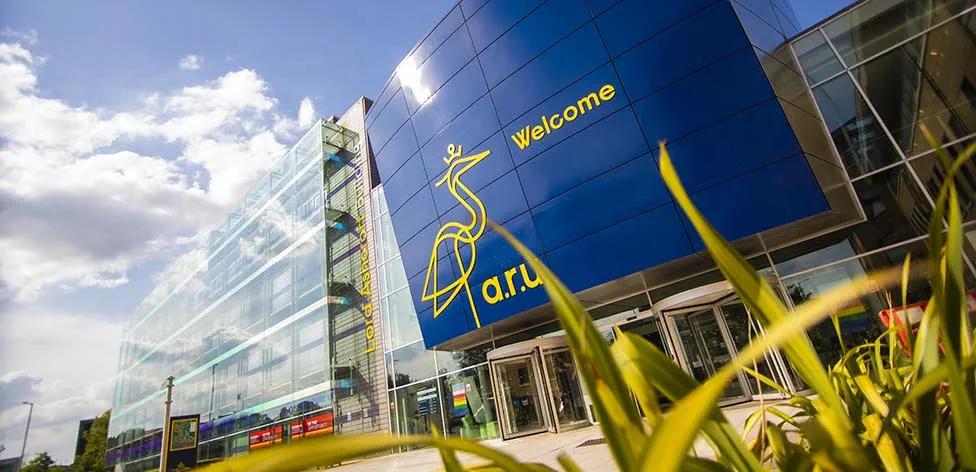
Anglia Ruskin University (ARU) is a prominent public comprehensive university in England, with a history dating back to 1858. It comprises the Faculty of Science and Engineering, the Faculty of Business and Law, the Faculty of Health, Medicine and Social Care, and the Faculty of Arts, Humanities, Education and Social Sciences, offering over 170 undergraduate, 100 postgraduate, and 40 doctoral programmes. The Computer Science and Artificial Intelligence programmes are based at its main campus in Cambridge, benefiting from the region’s high-tech industry, often referred to as the “Silicon Fen,” which provides cutting-edge resources for teaching and research. ARU is a modern university distinguished by its unique character, teaching excellence, and research intensity. It was ranked 301-350 in the Times Higher Education (THE) World University Rankings 2023, was named THE University of the Year, and received a Gold rating in the Teaching Excellence Framework (TEF) 2023. In the Research Excellence Framework (REF) 2021, 9 of its subject areas were rated as having world-leading research. In 2024, it became the first UK institution to receive the Outstanding Entrepreneurial University Award from the National Centre for Entrepreneurship in Education (NCEE).
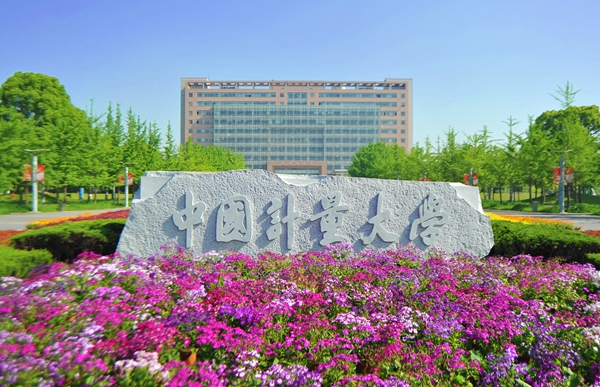
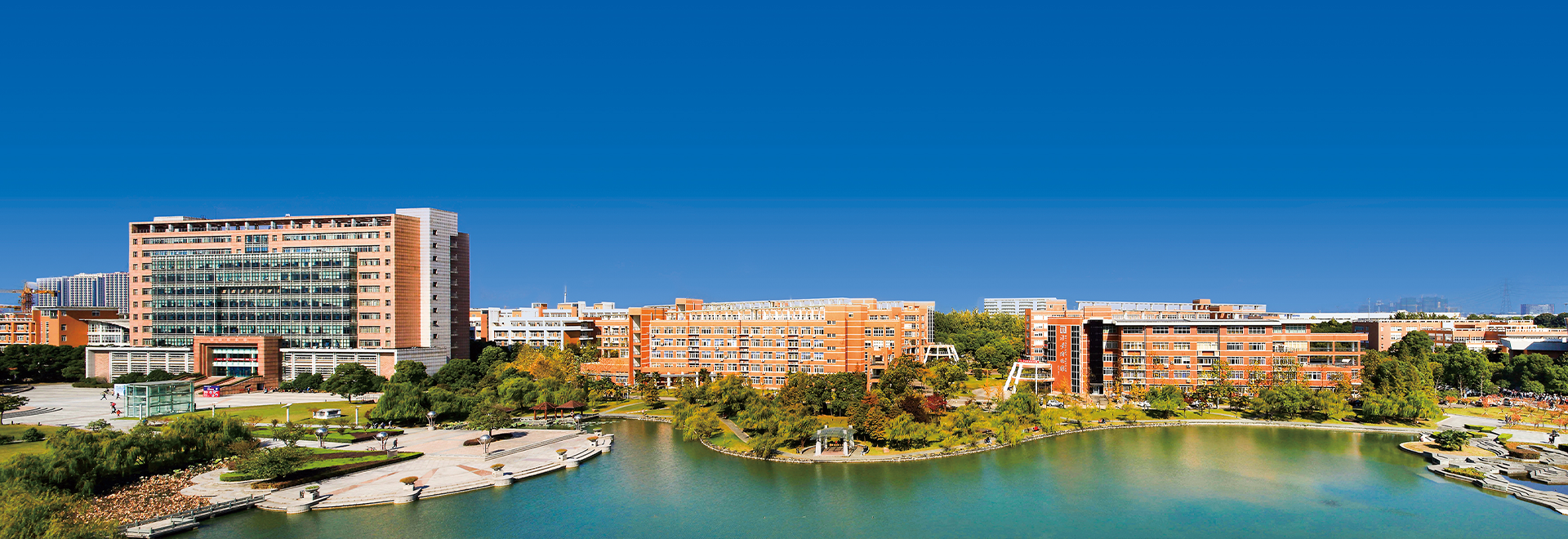
China Jiliang University (CJU) is a key university in Zhejiang Province, co-established by the province and the State Administration for Market Regulation. It offers 2 first-level discipline doctoral programmes, 15 first-level discipline master’s programmes, 15 professional master’s degree programmes, and boasts 8 disciplines (including Computer Science) ranked in the top 1% globally by ESI. The University also has 18 national-level first-class undergraduate programmes, 4 national characteristic programmes, 1 national comprehensive reform pilot programme, and 9 programmes accredited by the national engineering education accreditation body. Characterised by its focus on metrology, standards, quality, market regulation, and inspection and quarantine, CJLU pursues an open-door policy and continuously deepens international exchange and cooperation. It has established partnerships with over 90 overseas universities and research institutions and collaboratively runs 2 undergraduate and 2 postgraduate Sino-foreign cooperative education programmes with institutions in the UK, New Zealand, and Italy. The University hosts the Confucius Institute at the University of Finance and Administration in Prague, the Zhejiang-Czech Prague Silk Road Institute, the Zhejiang-Czech Centre for People-to-People Exchange, and the Institute for Central and Eastern European Studies. It also leads the global “Belt and Road” University Alliance for Standardisation Education, comprising 122 universities from 36 countries, and operates the “Belt and Road” College, with students from 51 countries including Russia, France, Morocco, Mongolia, and Uzbekistan.
VII. Programme Strengths
The Foreign Master’s Degree Programme in Artificial Intelligence leverages the strong disciplinary foundations and research capabilities of both institutions, combined with the abundant industrial resources of the Yangtze River Delta region. Its key advantages include:
◆ Accredited Standing: Quality Assured, with Degree Authentication.
This programme integrates the cutting-edge expertise of CJU and ARU in computer science and AI applications, ensuring rigorous quality in training. Graduates will be awarded the MSc in Artificial Intelligence from Anglia Ruskin University, which is identical to the degree awarded to students studying in the UK and is eligible for academic credential authentication by theChinese Service Centerfor Scholarly Exchange, granting it the same validity as a domestic dual-certificate master’s degree.
◆ Distinguished Faculty: A Powerful Collaboration at the Forefront of Academia.
Theprogramme operates on a Sino-British dual-supervisor system. Core courses are taught by leading ARU professors and PhDs, who are also deeply involved in guiding thesis research and training, ensuringteaching content is aligned with international academic standards.
◆ Innovative Curriculum: Cutting-Edge and Interdisciplinary, Precisely Aligned with Industry Needs.
The programme adopts ARU’s original curriculum system, effectively integrating academic frontiers with industrial demands. Through detailed case-based teaching, it systematically strengthens core AI competencies in machine learning, deep learning, natural language processing, and algorithm design. The fully English-taught environment, combined with proven teaching models and superior practical training conditions, significantly broadens students’ international perspectives.
◆ Accelerated Academic Pathway: Direct Access to Prestigious Doctoral Study. The programme establishes a coherent Master’s-to-PhD training pathway, enabling an efficient transition from coursework to research. Eligible students can apply for doctoral studies at ARU through an articulation pathway, streamlining the admission process and providing a high-quality route for advanced academic pursuits.
◆ Advanced Research Platforms: State-of-the-art Facilities for Exploratory Work.
The Institute possesses advanced laboratories and research platforms that support student involvement in high-level national AI projects and robust research activities. Multiple specialised labs are equipped with first-class facilities such as embodied AI systems, creating a comprehensive support system spanning from algorithm development to system testing, thus meeting the technical demands of cutting-edge exploration.
Strategic Location: Based in the Yangtze River Delta, with Direct Access to Industrial Resources.
Situated in Hangzhou, a core hub for artificial intelligence in the Yangtze River Delta, the university is surrounded by industry giants such as Alibaba, Hikvision, and Ant Group. Benefiting from Hangzhou’s vibrant AI industrial ecosystem, fostered by the renowned “Six Little Dragons,” students have unparalleled opportunities to engage directly with frontier technologies, access premium resources, and accumulate valuable practical experience.
VIII. Contact Information
Tel: 0571-86835765, 0571-87672366
Email: aru@cjlu.edu.cn
For any inquiries not addressed, please contact us via telephone.



 School WeChat Official Account
 Admission Office WeChat Official Account
 JEI WeChat Official Account
 CN
CN
